Mailboxes & agendas
Mailboxes & agendas
# Gmail and Google Calendar
# Synchronization with Skalin
To connect to your e-mail accounts and calendars, you first need to whitelist Skalin on your Google Workspace environment. This should be done by a Google Workspace administrator, and the process is fairly straightforward.
Once Skalin has been approved, go to https://app.skalin.io/#/integration/gmail (opens new window) to connect your Gmail inbox and Google calendar.
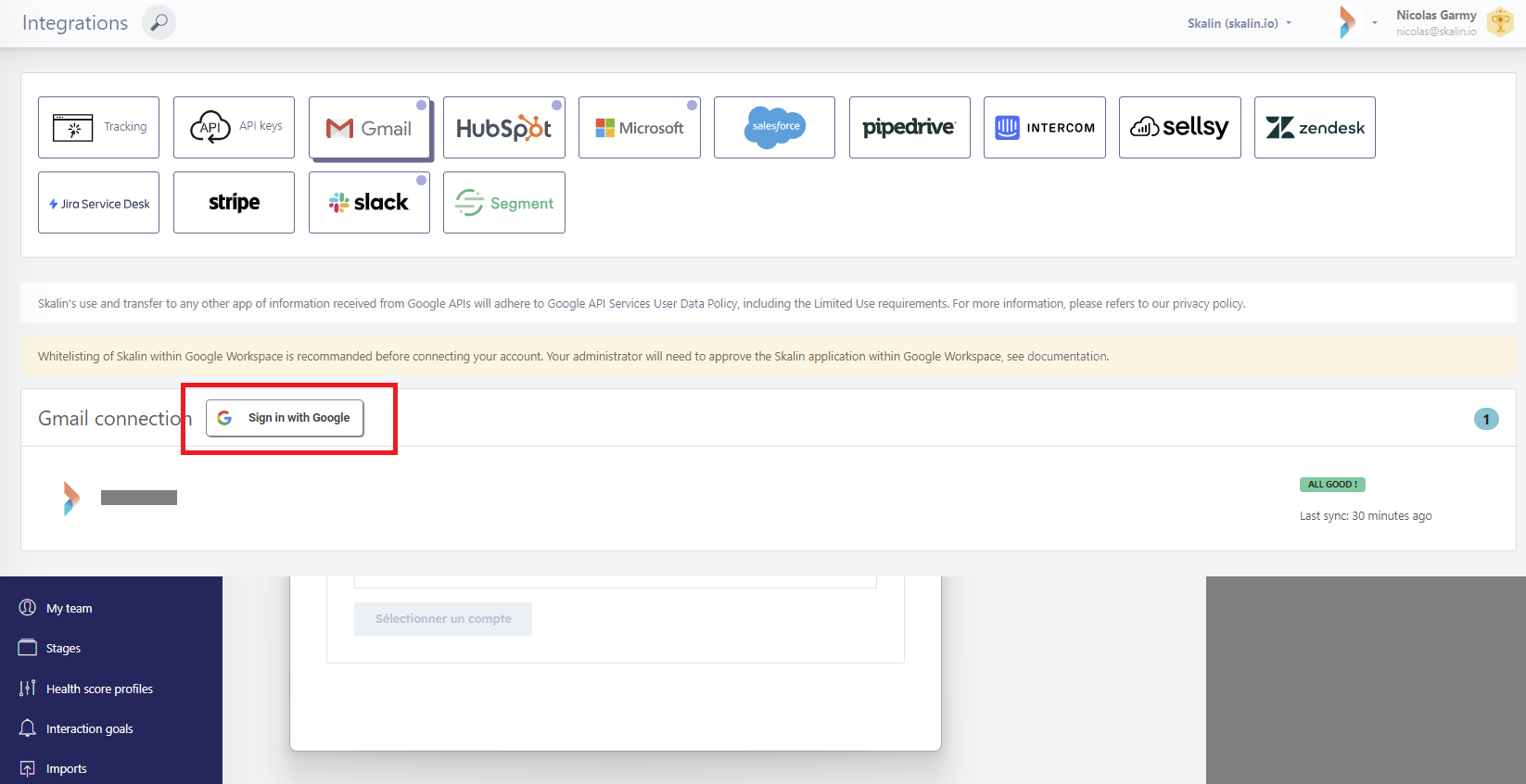
Click on the "Sign-in with Google" button:
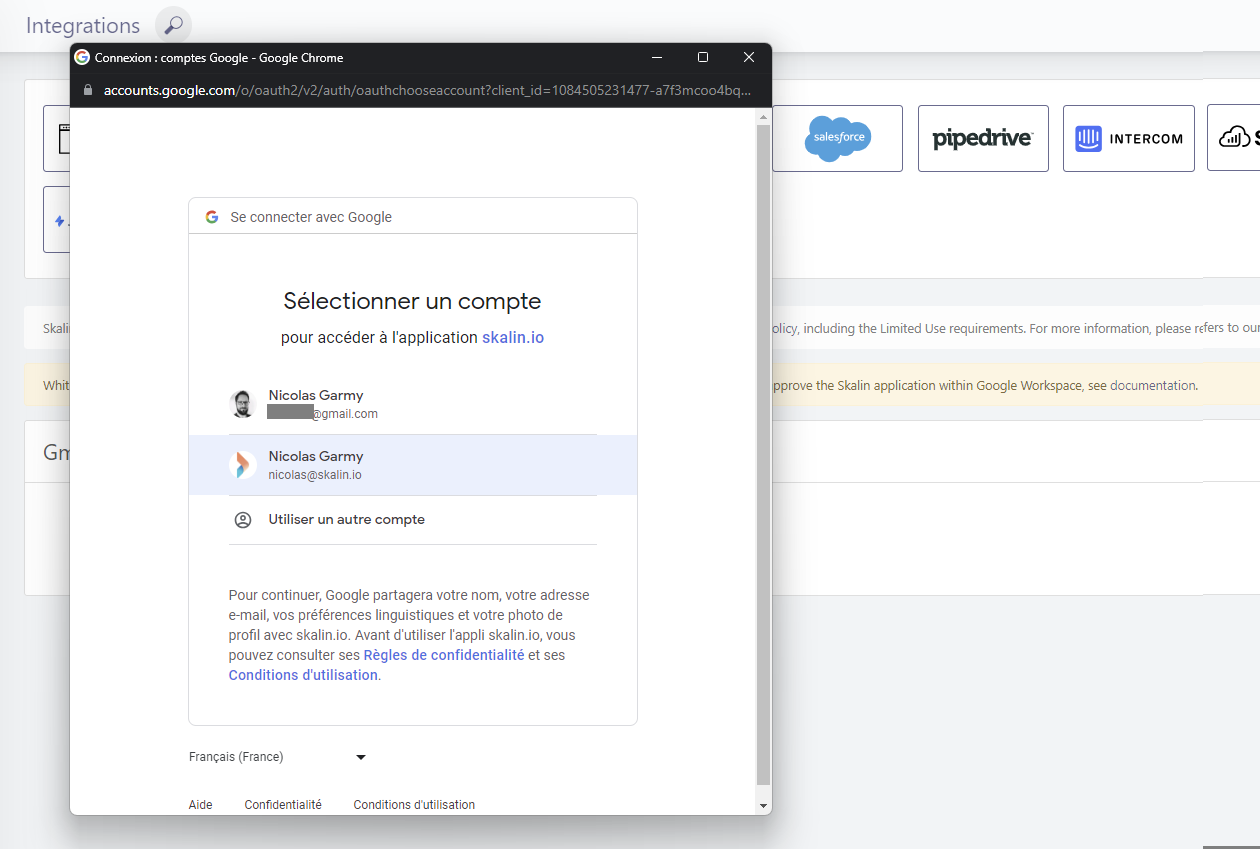
Select the appropriate account:
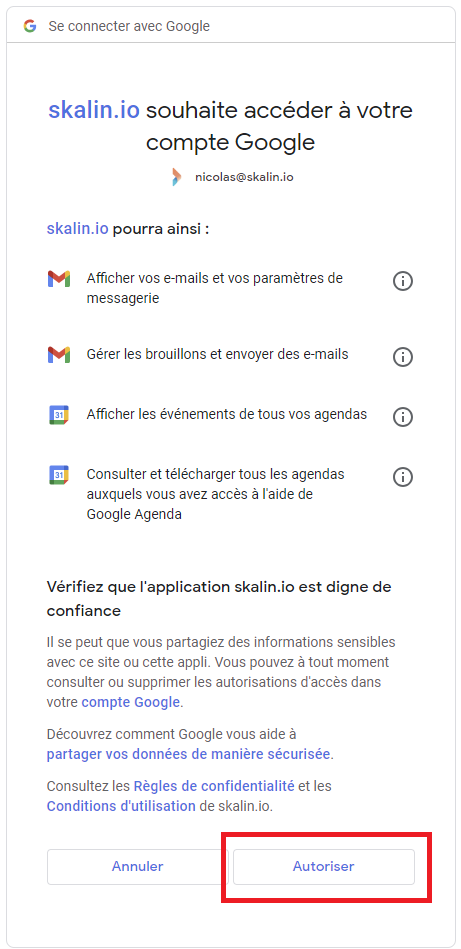
Finally, click on authorize. That's it, you're connected!
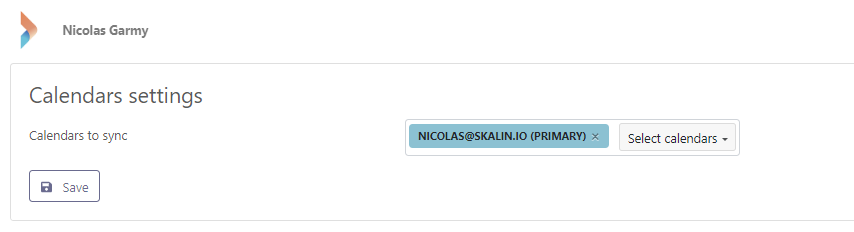
By default, only your main calendar is synchronized. You can add your secondary calendars as required. Click "Save" to save your configuration.
All you have to do is wait a few hours for the initial synchronization to take place. Thereafter, your messages and appointments will be synchronized every hour.
# Whitelisting of Skalin within Google Workspace
It is possible that the administrator of your Google Workspace account has security rules that block authentication. In this case, your administrator will need to approve the Skalin application within Google Workspace.
In this case, go to the administration console https://admin.google.com/ (opens new window)
Then : Security > Access & Data Control > API commands > Application access control 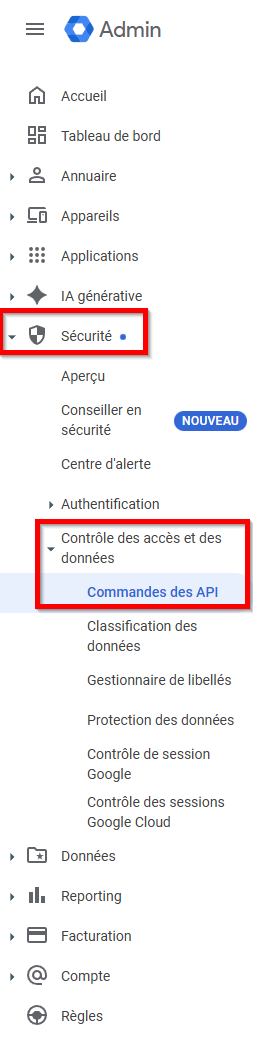
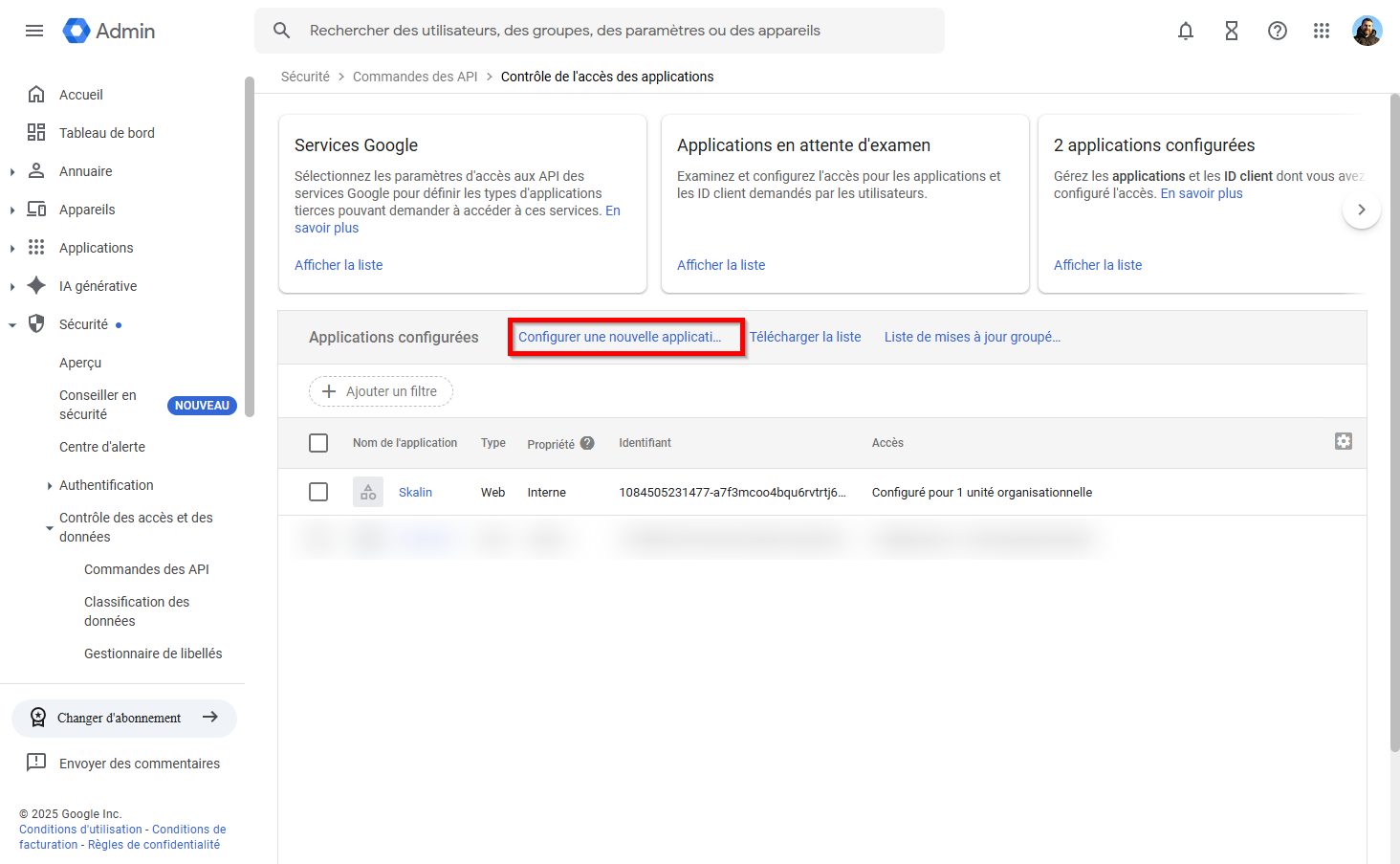
Then click on “MANAGE ACCESS FOR APPLICATIONS” then click on “Configure a new application” 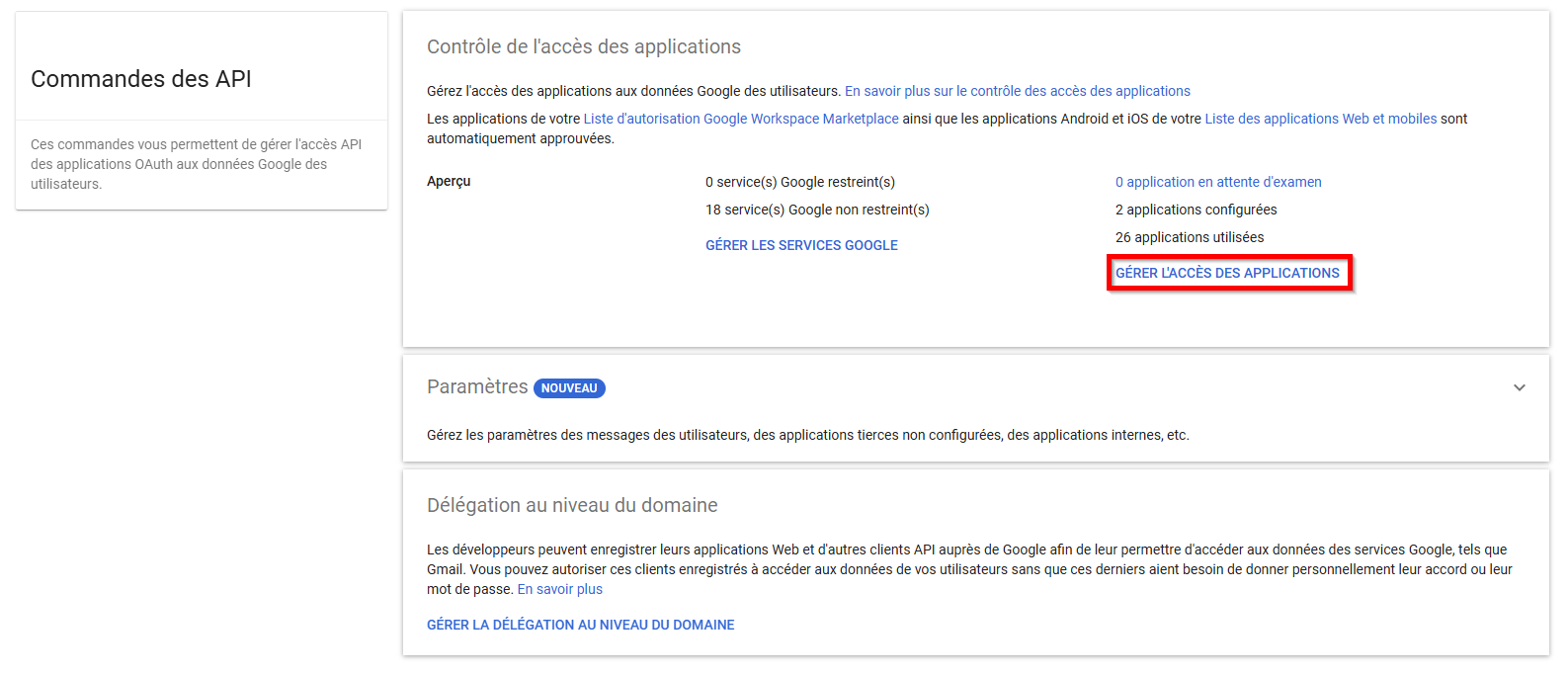
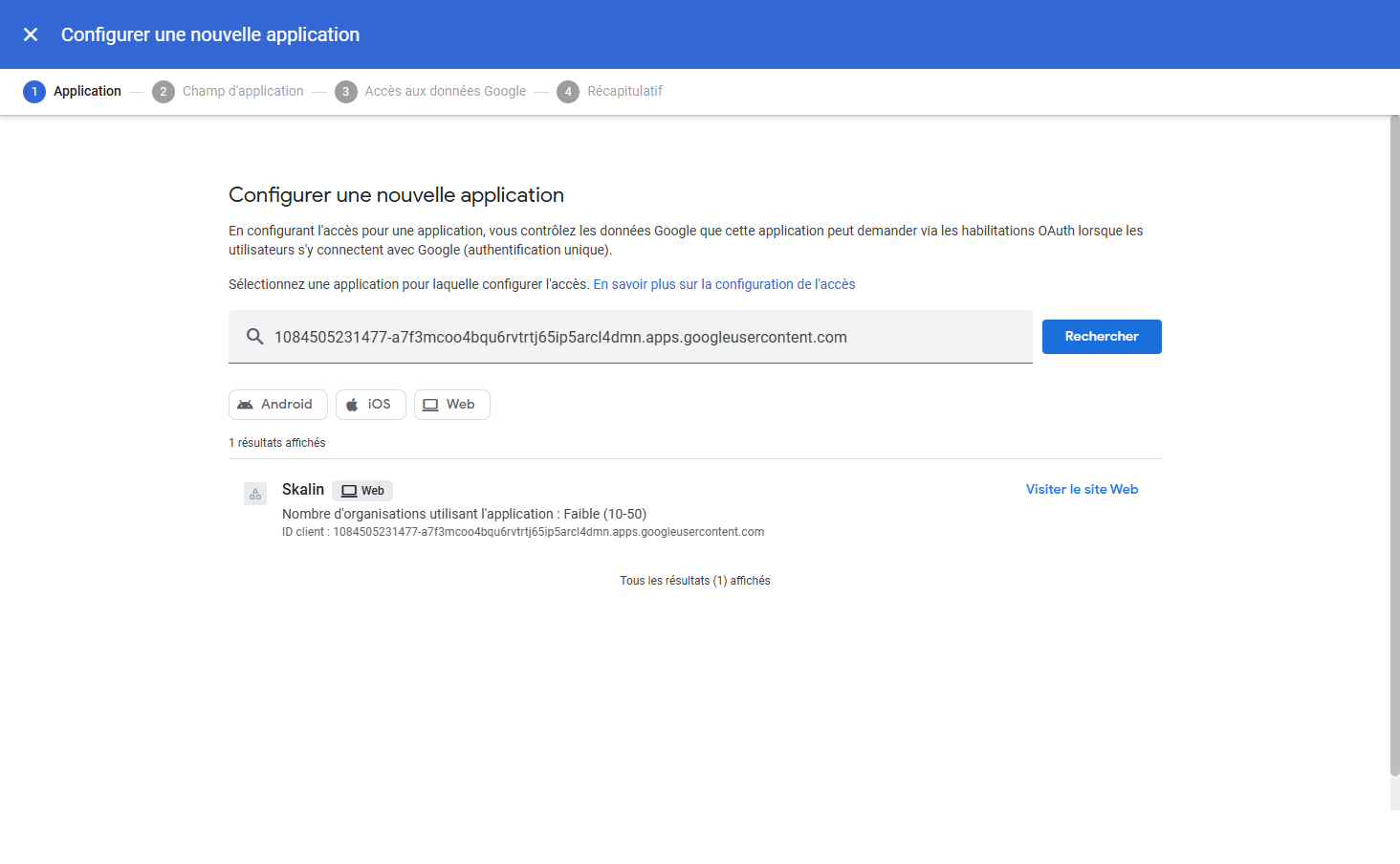
Fill in the following form:
- Application : Search for Skalin app thanks to its identifier: 1084505231477-a7f3mcoo4bqu6rvtrtj65ip5arcl4dmn.apps.googleusercontent.com Select Skalin line and continue.
- Application field : Select all your organieation users or a predefined unit.
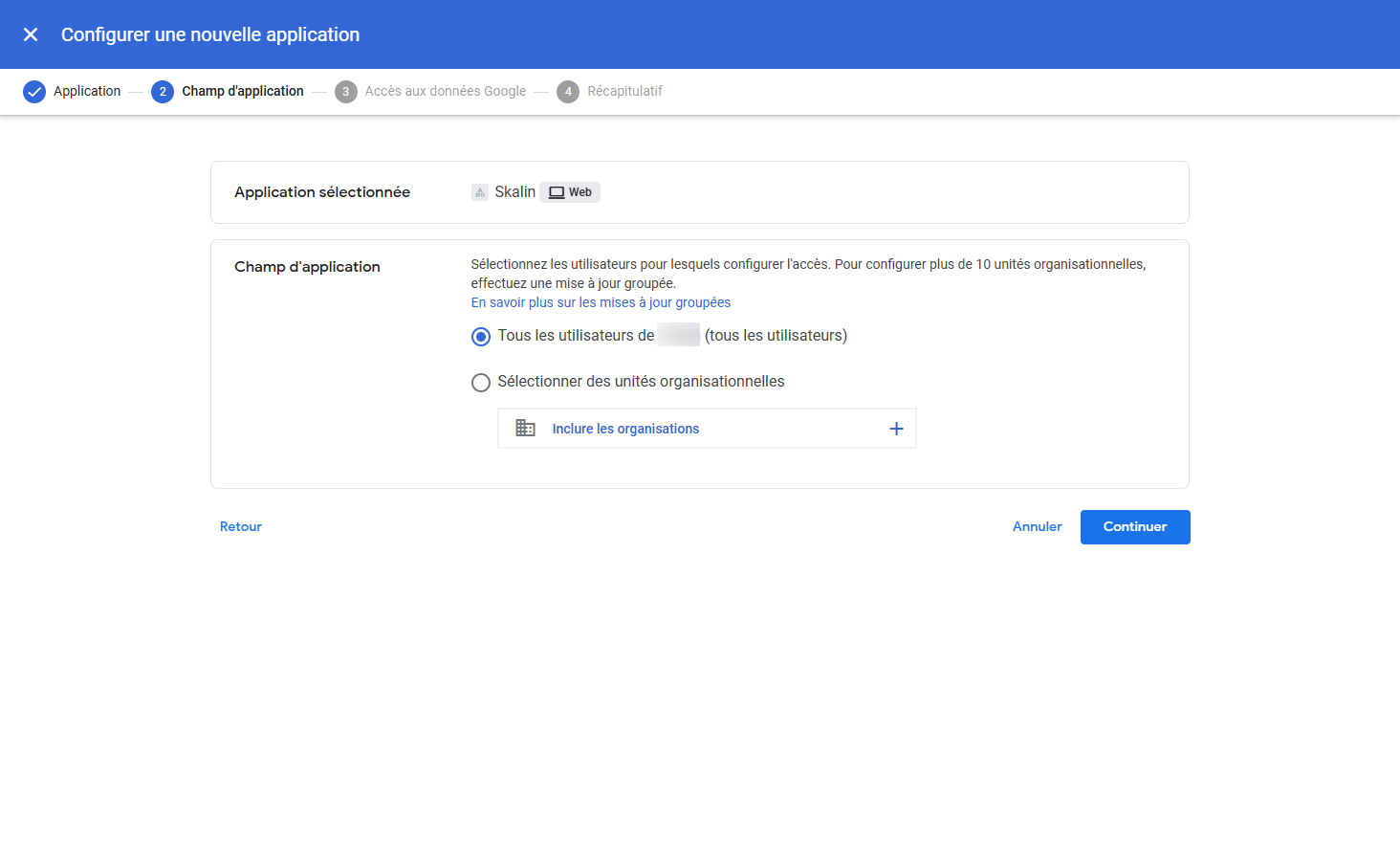
- Google data access: Select "Trusted". Limited and Specific Google data authrizations are not sufficient for Skalin to work properly. Trusting Skalin app doesn't give it all permissions, only when users will connect their Google accounts will they grant permissions to some specific scopes, mainly reading and writing emails and reading the agenda.

- Summary
Check the configuration and finish.
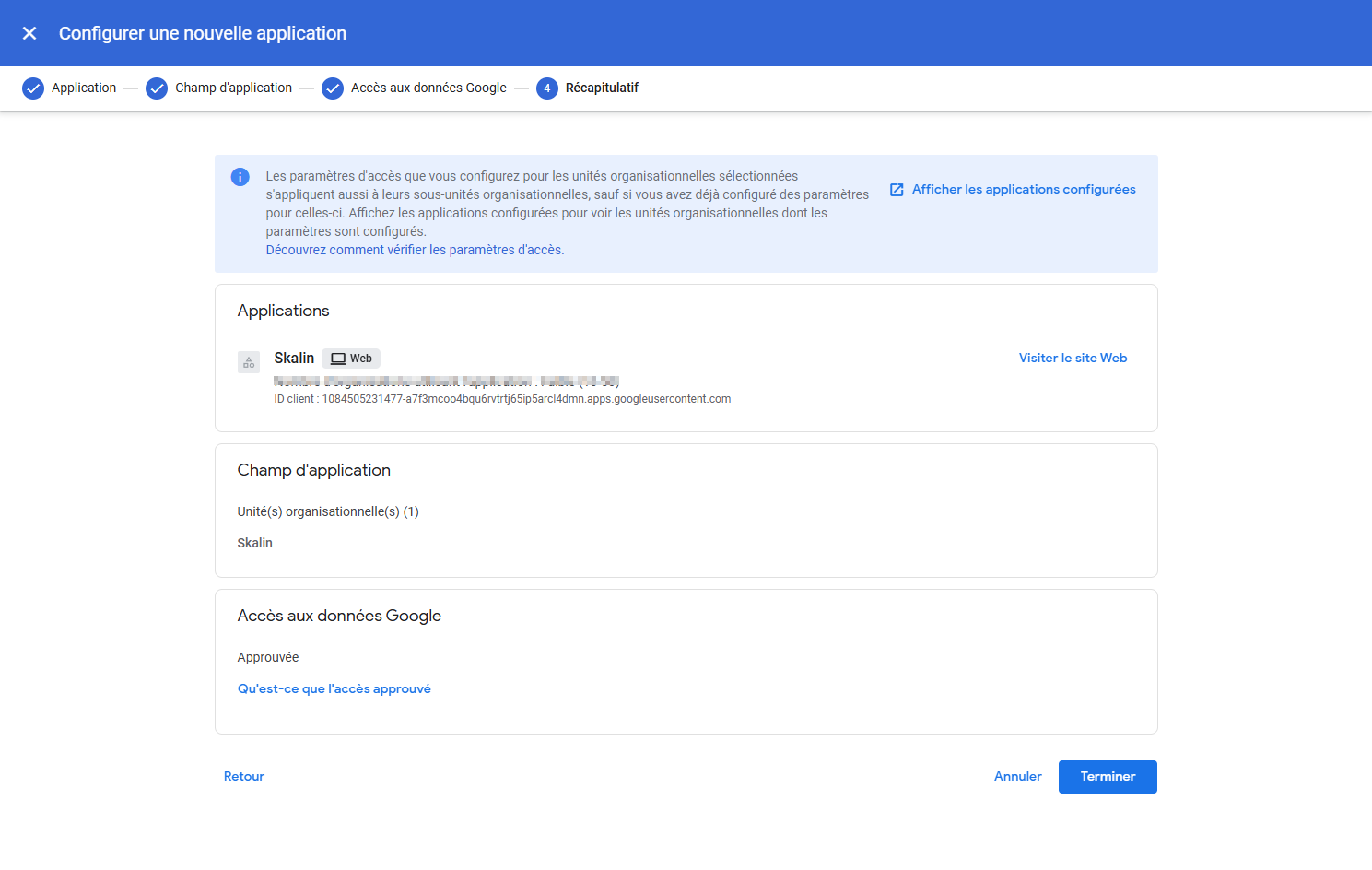
Info
Granting access takes place in two steps. First, whitelisting Skalin in Google Workspace only allows the application to be available within your organization — it does not grant any access to user data. Actual authorization occurs when each user connects their Google account and explicitly approves Skalin’s requested permissions.
Once this authorization is completed, Skalin strictly limits its scope to emails and meetings that involve both a Skalin user and a contact recorded in Skalin. No other emails, events, or content are accessed or logged.
# Microsoft 365
Go to https://app.skalin.io/#/integration/microsoft (opens new window) to connect your MS365 box and your Microsoft calendar. Click on the "Connect me" button. Select the account you wish to synchronize, enter your credentials if applicable, then authorize Skalin to access your information. You're connected!
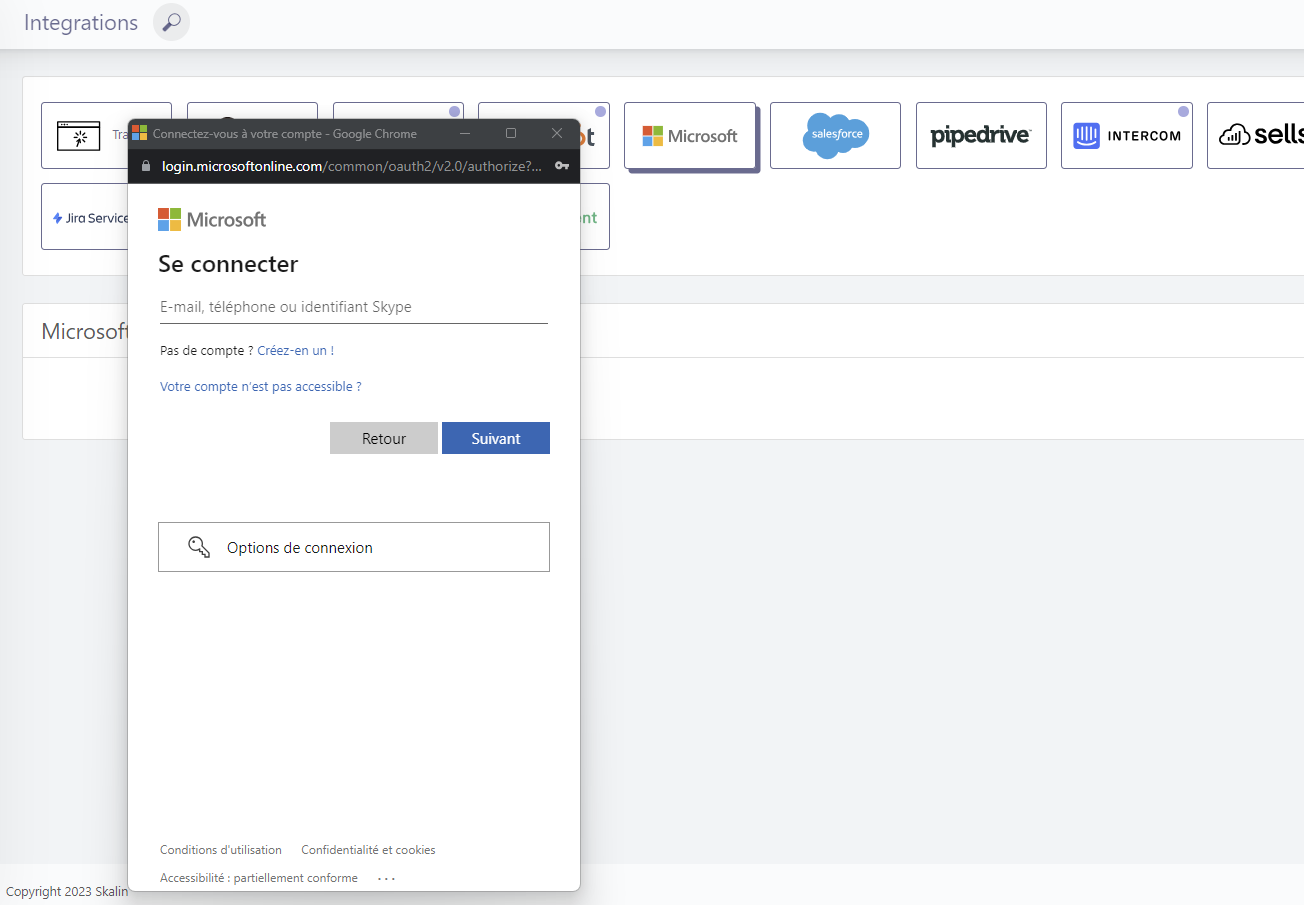
All you have to do is wait a few hours for the initial synchronization to take place. Thereafter, your messages and appointments will be synchronized every hour.
Similar example with Google:
# Slack
Slack integration will enable your team to receive alerts or notifications, either on a shared channel (public channels only), or live via the Skalin Bot.
To connect, go to https://app.skalin.io/#/integration/slack (opens new window) and click on "Connect me". Select the Slack account you want to connect (top right), check the requested permissions and click "Allow".
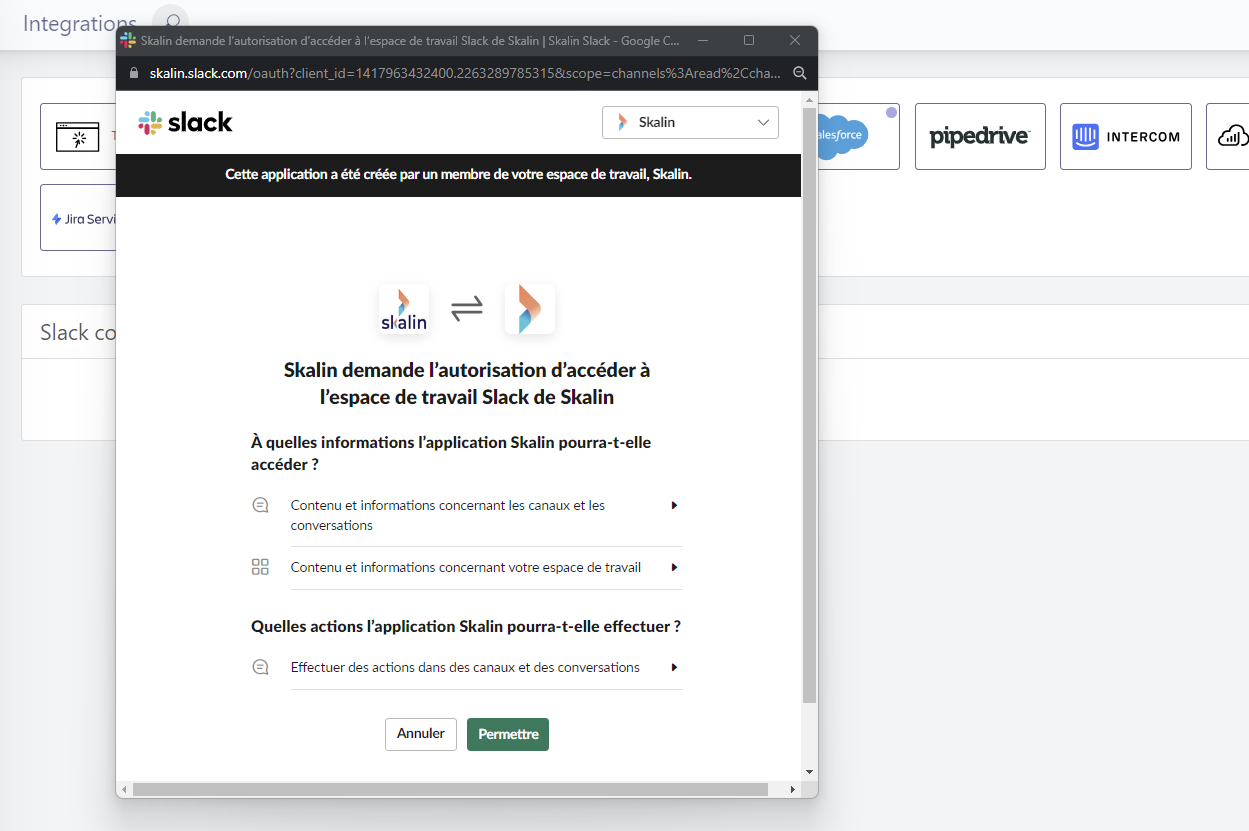
You will then be prompted to choose a default communication channel. Each time you set up a Slack alert or notification at a Playbook, you'll be able to use this default channel, or choose another channel, or send messages to specific users.
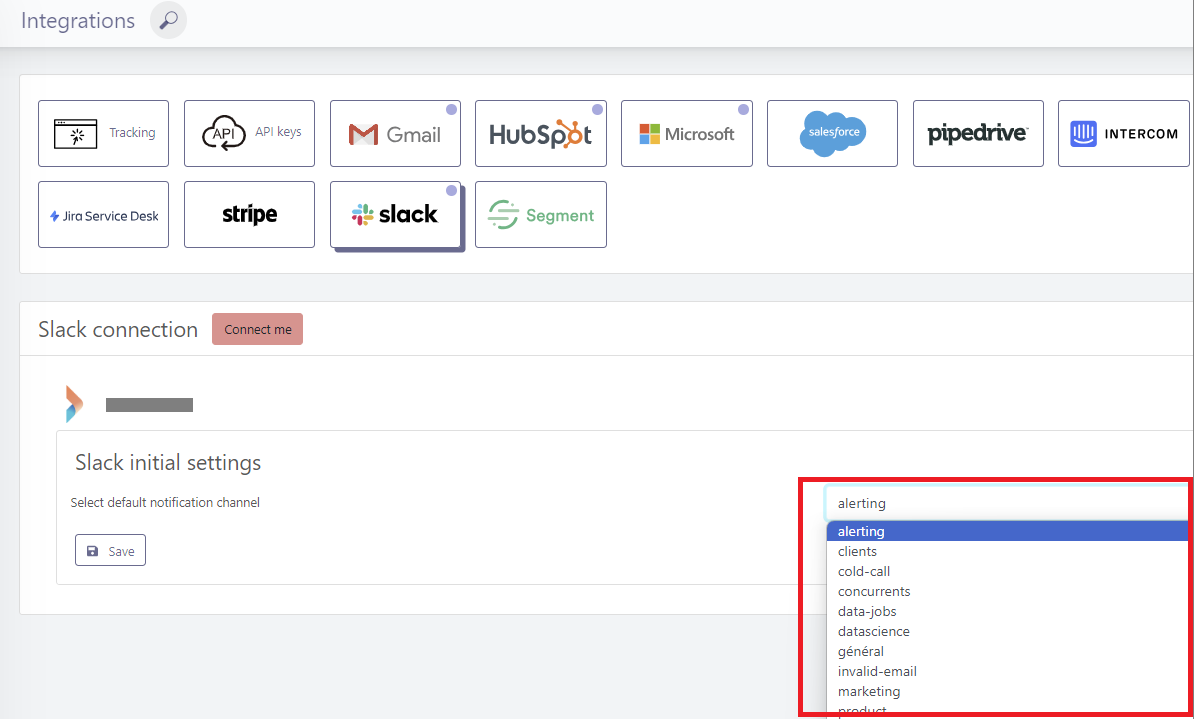
From now, you can use Slack for Alerts and Playbooks.
# Microsoft Teams
The Microsoft Teams integration lets your playbooks and alerts post notifications in Teams, either in a team channel or as a direct message to members of your team (customer owner, customer team, selected users…). Messages are sent by the Skalin bot, not on behalf of a user.
# Install the Skalin app in Teams
Teams only lets a bot write where its app is installed. In Microsoft Teams:
- Open Apps, search for Skalin and choose Add to a team.
- Repeat for every team whose channels should receive notifications.
Depending on your organization's policy, your Microsoft 365 administrator may first have to allow the Skalin app in the Teams admin center (Teams apps → Manage apps).
As soon as it is added, the Skalin bot posts a welcome message with a link code.
# Link Teams to Skalin
In Settings → Integrations → Microsoft Teams, click Connect me and enter the link code, or click Open Skalin in the bot's message.
The code is valid for 24 hours and can be used once. To get a new one, send any message to the Skalin bot in Teams.
Then choose the default channel, used by the playbook steps that do not set a channel. The list holds every channel of the teams where the Skalin app is installed; if it is empty, add the app to a team first.
# Send a notification from a playbook
Add the Notify Microsoft Teams action to your playbook, then choose the recipient:
- Channel: the message starts a new thread in the chosen channel (or the default one);
- Customer owner, Team member, User or Custom field (user type): a direct message is sent to each person.
The message shows the playbook and step names, the customer and contact, then the text written in the step (with its variables replaced). Two buttons open the customer and the playbook in Skalin.
# Receive alerts in Teams
In Alerts, choose Microsoft Teams as the notification type. The recipients are the same as for Slack (channel, customer owner, team member, user, custom field) and the alert content is identical. The Slack and Microsoft Teams types are only offered when their connector is configured; both can be at the same time.
# Good to know
- A recipient is found in Teams by their Skalin e-mail address (or one of their additional addresses). They must belong to a team where the Skalin app is installed, or have installed the app for themselves.
- If a recipient cannot be found, the others still get the message; the step only fails when nobody could be reached.
- Formatting is simplified: bold, italics, lists and links are kept; headings become bold.
- Removing the Skalin app from a team also removes its channels from the list. Steps that targeted one of them fail.
# Fathom
Fathom (opens new window) records your meetings and writes an AI summary of them. The Skalin integration pulls that summary and attaches it to the right customer automatically.
# Create the API key
Go to developers.fathom.ai (opens new window), API Keys section, and create a key.
Beware: a key is personal. It only grants access to the recordings of the user who created it and those shared with their Fathom team. Each CSM therefore has to connect their own key from their Skalin account.
# Connect Fathom to Skalin
In Settings → Integrations → Fathom, click Connect and paste the API key. Skalin checks the key straight away.
# Choose what lands in Skalin
The summary has one destination, picked under What to do with the summary:
- Create a note — every Fathom recording becomes a note on the customer, addressed to the external attendees of the meeting. This is the default.
- Replace the meeting description — the summary is attached to the meeting already imported from your calendar (Google or Microsoft) and replaces its description. When no calendar meeting matches, a meeting is created.
The two are exclusive: combining them would make the same recording show up twice in the activity feed.
Careful with the second one: the description is rewritten on every synchronisation, so a description typed by hand in Skalin will be overwritten. The calendar synchronisation (Google or Microsoft 365) also has to be active, as it is what creates the meeting Fathom then completes.
# Imported content
- Fathom's AI summary, converted to formatted text.
- The action items captured during the meeting (optional).
- A link to the Fathom recording (optional).
# Filters
Fathom teams, Recorded by, Meeting type: leave empty to pull everything.
In every case, a recording is only imported when at least one attendee is a contact known to Skalin. That contact is what determines the customer the note or the meeting is attached to. Internal meetings, with no attendee outside your company, therefore never come through.
# Good to know
- Synchronisation is periodic: allow up to an hour between Fathom finishing the recording and it showing up in Skalin.
- A recording without a summary (Fathom still processing) is skipped and picked up on the next synchronisation.
# Fireflies
Fireflies (opens new window) transcribes your meetings and writes an AI summary of them. The Skalin integration pulls that summary and attaches it to the right customer automatically.
# Getting the API key
Go to app.fireflies.ai (opens new window), section Integrations → Fireflies API, and copy the key.
Careful: a key is personal. It only grants access to the meetings of the user who created it and those shared with their Fireflies team. Every CSM therefore has to connect their own key from their Skalin account.
Mind the quota too: on the Free and Pro plans, Fireflies caps the API at 50 and 500 calls per day — a quota shared with your other connected tools. Business and Enterprise plans move to 60 calls per minute.
# Connecting Fireflies to Skalin
In Settings → Integrations → Fireflies, click Connect and paste the API key. Skalin checks the key straight away.
# Choosing what lands in Skalin
The summary has one destination, picked under What to do with the summary:
- Create a note — every transcribed meeting becomes a note on the customer, addressed to the external attendees. This is the default.
- Replace the meeting description — the summary is attached to the meeting already imported from your calendar (Google or Microsoft) and replaces its description. When no calendar meeting matches, a meeting is created.
The two are exclusive: combining them would show the same meeting twice in the activity feed.
Careful with the second one: the description is rewritten on every synchronisation, so a description typed by hand in Skalin will be overwritten. The calendar synchronisation (Google or Microsoft 365) also has to be active, as it is what creates the meeting Fireflies then completes.
# Imported content
- The Fireflies AI summary, converted to formatted text. Fireflies produces several renderings of the same summary (detailed, notes, bullet lists, one sentence): Summary format picks the one to import. When it is empty for a given meeting, Skalin falls back on another rendering rather than skipping the meeting.
- The custom sections you added to your summary template from the Fireflies dashboard (optional).
- The action items captured during the meeting (optional).
- A link to the Fireflies transcript (optional).
# Filters
Organised by, Fireflies channel: leave empty to import everything.
In every case, a meeting is only imported when at least one attendee is a contact Skalin knows. That contact is what determines the customer the note or the meeting is attached to. Internal meetings, with no attendee outside your company, therefore never land.
# Good to know
- The synchronisation is periodic, count up to an hour between Fireflies finishing the transcript and it reaching Skalin.
- A meeting whose summary is still being generated is skipped and picked up on the next run: Skalin systematically re-reads the last 24 hours for that reason.
- A meeting still in progress is never imported.
# Noota
The connection to Noota is set up using an API key.
Business account required
Creating an API key requires a Noota business account.
Each user must create their own API key, unless the administrator has access to all of the team's conversations, in which case a single key is enough.
Noota (opens new window) records your meetings and writes an AI report of them. The Skalin integration pulls that report and attaches it to the right customer automatically.
# Getting the API key
The key is found in your Noota account settings, API section.
Careful: a key is personal. It only grants access to the recordings of the user who created it. Every CSM therefore has to connect their own key from their Skalin account.
# What lands in Skalin
Every Noota recording becomes a note on the customer, addressed to the external attendees of the meeting.
Unlike the Fathom and Fireflies integrations, the report cannot replace the description of a calendar meeting. That is a limitation of the Noota API rather than a choice: to pair a recording with the matching meeting, Skalin needs the scheduled time of the meeting, and Noota only exposes the moment recording started — seconds to minutes later. A meeting built on that would never pair with the calendar one and would show up twice in the activity feed.
# Imported content
- The Noota AI report, with the formatting it has in Noota.
- A link to the original meeting (video call) when Noota knows it (optional).
# Filters
Recorded by: the address of the Noota account owning the recordings. Leave empty to import everything.
In every case, a recording is only imported when at least one attendee is a contact Skalin knows. That contact is what determines the customer the note is attached to. Internal meetings, with no attendee outside your company, therefore never land.
# Good to know
- The synchronisation is periodic, count up to an hour between Noota finishing the recording and it reaching Skalin.
- Only recordings whose transcription is complete are picked up. One still being processed is skipped and taken on the next run: Skalin systematically re-reads the last 24 hours for that reason.
- The note carries the attendees' addresses, not their names: the Noota API only returns names alongside the full verbatim transcript, which would be disproportionate to download for that.
# tl;dv
To connect tl;dv, go to the tl;dv integration page in Skalin and fill in the information requested on screen.
Paid plan required
API access is not available on the tl;dv free plan. You must have one of tl;dv's three paid accounts to connect the integration.
tl;dv (opens new window) records your meetings and writes AI notes of them. The Skalin integration pulls those notes and attaches them to the right customer automatically.
# Creating the API key
In tl;dv, go to Personal settings → API keys and create a key.
A Business or Enterprise account is required: free and Pro accounts have no API access.
Careful: a key is personal. It only grants access to the meetings the account that created it can reach. Every CSM therefore has to connect their own key from their Skalin account.
# Connecting tl;dv to Skalin
In Settings → Integrations → tl;dv, click Connect and paste the API key. Skalin checks the key straight away.
# Choosing what lands in Skalin
The notes have one destination, picked under What to do with the notes:
- Create a note — every recorded meeting becomes a note on the customer, addressed to the external attendees. This is the default.
- Replace the meeting description — the notes are attached to the meeting already imported from your calendar (Google or Microsoft) and replace its description. When no calendar meeting matches, a meeting is created.
The two are exclusive: combining them would show the same meeting twice in the activity feed.
Careful with the second one: the description is rewritten on every synchronisation, so a description typed by hand in Skalin will be overwritten. The calendar synchronisation (Google or Microsoft 365) also has to be active, as it is what creates the meeting tl;dv then completes.
# Imported content
- The tl;dv AI notes. They come in two shapes — a written summary and the meeting chapters — and Notes format picks the one to import. When it is empty for a given meeting, Skalin falls back on the other rather than skipping the meeting.
- A link to the tl;dv recording (optional).
# Filters
Unlike the other notetakers, tl;dv can rule out internal meetings itself: it compares the organizer's email domain with the attendees' and only returns meetings with at least one attendee on another domain. Skalin relies on that filter, so internal meetings are never downloaded at all.
My meetings only narrows it further to the meetings the key owner attended. Leave it off to import every meeting the key can reach.
In every case, a meeting is only imported when at least one attendee is a contact Skalin knows. That contact is what determines the customer the note or the meeting is attached to.
# Good to know
- The synchronisation is periodic, count up to an hour between the meeting ending and the notes reaching Skalin.
- The notes are written after the meeting: Skalin systematically re-reads the last 24 hours so a meeting summarised late is not missed.
- A meeting whose notes have not been generated yet is skipped and picked up on the next run.
# Granola
Granola (opens new window) takes notes of your meetings and writes an AI summary of them. The Skalin integration pulls that summary and attaches it to the right customer automatically.
# Creating the API key
In Granola, go to Settings → Connectors → API keys and create a key. It starts with grn_.
A Business or Enterprise workspace is required: the other plans have no API access.
Careful: a key is personal. It only grants access to the notes the account that created it can reach. Every CSM therefore has to connect their own key from their Skalin account.
# Connecting Granola to Skalin
In Settings → Integrations → Granola, click Connect and paste the API key. Skalin checks the key straight away.
# Choosing what lands in Skalin
The summary has one destination, picked under What to do with the summary:
- Create a note — every meeting Granola wrote notes on becomes a note on the customer, addressed to the external attendees. This is the default.
- Replace the meeting description — the summary is attached to the meeting already imported from your calendar (Google or Microsoft) and replaces its description. When no calendar meeting matches, a meeting is created.
The two are exclusive: combining them would show the same meeting twice in the activity feed.
Careful with the second one: the description is rewritten on every synchronisation, so a description typed by hand in Skalin will be overwritten. The calendar synchronisation (Google or Microsoft 365) also has to be active, as it is what creates the meeting Granola then completes.
Unlike Noota, that second mode is available here: Granola exposes the scheduled time of the meeting, not just the moment recording started, which is what pairing the summary with the calendar meeting needs.
# Imported content
- The Granola AI summary. It comes in two shapes — formatted or plain text — and Summary format picks the one to import. When it is empty for a given meeting, Skalin falls back on the other rather than skipping the meeting.
- Your own notes, the ones you typed during the meeting (optional, off by default). Careful: they become visible to your whole team once in Skalin.
- A link to the original Granola note (optional).
The full transcript of the meeting is never downloaded.
# Filters
Granola folder: only import the notes filed in a given folder. Granola applies that filter itself, so it also cuts down the number of calls to its API. Leave empty to import everything.
Recorded by: the address of the Granola account owning the notes. Leave empty to import everything.
Unlike tl;dv, Granola does not rule out internal meetings on its own: Skalin applies the rule, comparing the organiser's domain with the attendees'.
In every case, a meeting is only imported when at least one attendee is a contact Skalin knows. That contact is what determines the customer the note or the meeting is attached to. Internal meetings, with no attendee outside your company, therefore never land.
# Good to know
- The synchronisation is periodic, count up to an hour between the end of the meeting and the summary reaching Skalin.
- Only notes whose AI summary is finished are picked up. One still being processed is skipped and taken on the next run: Skalin systematically re-reads the last 24 hours for that reason.
- On a first connection, Skalin pulls the last six months of notes. The Granola API only gives the attendees of a meeting by reading the note itself, one by one: a wider window would cost a great many calls for few meetings still worth having.
# Claap
Claap (opens new window) records your meetings and writes an AI summary of them: key takeaways, action items, outline of the meeting. The Skalin integration pulls that summary and attaches it to the right customer automatically.
# Creating the API key
The Claap API is only available on the Enterprise plan.
In Claap, an Admin or Owner of the workspace goes to Workspace settings → API & Webhooks → API and clicks Create API key. The key starts with cla_ and is only shown once: copy it right away.
Careful: unlike most notetakers, a Claap key is not personal. It grants access to every recording visible to the whole workspace, whoever recorded it. Private recordings, on the other hand, are never reachable through the API.
# Connecting Claap to Skalin
In Settings → Integrations → Claap, click Connect and paste the API key. Skalin checks the key straight away.
On connection, the Recorded by filter is set to your own address: the connection only brings in your recordings. Every CSM can thus connect the same key from their Skalin account without meetings being imported several times. For a single connection covering the whole team, pick All recordings of the workspace.
# Choosing what lands in Skalin
The summary has one destination, picked under What to do with the summary:
- Create a note — every Claap recording becomes a note on the customer, addressed to the external participants. This is the default.
- Replace the meeting description — the summary is attached to the meeting already imported from your calendar (Google or Microsoft) and replaces its description. When no calendar meeting matches, a meeting is created.
The two are exclusive: combining them would show the same meeting twice in the activity feed.
Careful with the second option: the description is rewritten on every synchronisation, so a description typed by hand in Skalin will be overwritten. The calendar synchronisation (Google or Microsoft 365) also has to be active, as it is what creates the meeting Claap then completes.
The calendar meeting is matched on its title and scheduled start. Claap takes the title of the calendar event, but it can be edited: a recording renamed in Claap before its first synchronisation creates a separate meeting in Skalin.
# Imported content
- The key takeaways of the meeting.
- The action items.
- The outline of the meeting, its chapters as Claap splits it (optional, off by default).
- The AI fields (insights) set up in your Claap workspace, each under its own title (optional, off by default).
- A link to the original Claap recording (optional).
When the meeting was translated in Claap, the summary is taken in the language of the active transcript. The full transcript and the video are never downloaded.
# Filters
External meetings only (on by default): skips the meetings Claap flags as internal, with nobody outside your workspace, as well as the recordings attached to no meeting (file upload, call with no known participant).
Recorded by: only import the recordings of one Claap user. This filter is applied by Claap itself.
Claap view: only import the recordings of a public view of your Claap workspace, whose own filters then apply (folder, labels, meeting type…). This filter is applied by Claap itself. Leave empty to import everything.
In every case, a recording is only imported when at least one participant is a contact Skalin already knows. That contact decides which customer the note or the meeting is attached to.
# Good to know
- The synchronisation is periodic: allow up to an hour between the end of the meeting and the summary landing in Skalin.
- Only recordings whose processing is complete are picked up, and a recording with no AI summary is skipped. Skalin always re-reads the last 24 hours to catch the ones finalised in the meantime.
- Claap limits its API to 3,000 calls a day for the whole workspace, every key and every integration included. Skalin only reads the details of the recordings that involve a known contact, and stops on its own before the quota runs out to leave some to the other tools: the synchronisation then resumes where it stopped on the next run.
- On first connection, Skalin brings in the last six months of recordings. When a customer or a contact is created in Skalin, their meetings of the last six months are picked up on the next synchronisation.